
The rule book / one page / nothing else applies
A pool, a price feed, and a clock.
Every Stokha market is one question with two sides and a fixed moment of truth. This page is the whole rule book.
Getting started
A wallet. On BNB Chain use an EVM wallet such as MetaMask, Trust Wallet or Binance Wallet. On Solana use Phantom, Solflare or Backpack. On a phone, open stokha.com inside the wallet app's own browser. Then press Connect wallet at the top of the site.
The right network. The control beside the wallet button shows the network and switches between BNB Chain and Solana. If an EVM wallet is on another network, the wallet button offers to switch it in one press.
Tokens. While Stokha is on a test network, the wallet menu at the top of the site hands out 1,000 test USDT (or USDC on Solana) once an hour. The wallet also needs a little of the network's own coin for fees: test BNB from a BNB Chain testnet faucet, or devnet SOL from faucet.solana.com. Test tokens have no value.
A stake. Open a market, choose a side, enter an amount and confirm in the wallet. On BNB Chain the first stake needs a one-time approval before it. The slip shows the fee and an estimate of what the stake would collect before anything is signed.
The result. When the market settles, winnings are normally sent to the wallet automatically. They can also be collected from the Portfolio page.
The pool

A market asks a yes-or-no question about a price: will Bitcoin be above $65,000 at midnight UTC on Friday? You stake a dollar stablecoin on Yes or on No: USDT on BNB Chain, USDC on Solana. All stakes sit in the market's contract until the answer is known.
When the market settles, the winning side gets its stakes back and shares everything the losing side put in. Nobody sets the odds. They are simply the split of money between the two sides, and they move as people stake.
Because traders are matched against each other inside one pool, a market does not need a market maker or any money behind it before it opens. It is live from its first stake.
A worked example
Suppose 600 USDT has been staked on Yes and 400 USDT on No, after fees, with every stake placed at the same time.
| If the answer is | Winners share | A 100 USDT stake returns |
|---|---|---|
| Yes | 600 back + 400 from No | 166.67 |
| No | 400 back + 600 from Yes | 250.00 |
The less popular side pays more, as it should. The payout you see when you stake is an estimate, because stakes placed after yours change the split.
Why earlier pays more

In a plain pool, waiting is free: the closer to the deadline, the more you know. That punishes the people who commit early and gives the market its opening odds.
Stokha weights each stake by when it was placed. A stake made as the market opens carries a weight of ×2.0; the weight falls in a straight line to ×1.0 at the close. Winners always receive their own stake back first. Only the losing pool is divided by weight, so an early stake takes a larger share of the winnings and a late one can never lose money by winning.
Staking closes before the outcome is read, at a time fixed when the market is listed.
Settlement

Each market names a Chainlink price feed, a time, and either a strike price or, for Up or Down rounds, the moment its starting price is read. At expiry the contract takes the last price the feed published at or before that moment. It checks that no later price also qualifies, so whoever sends the settlement transaction cannot choose the number.
On Solana, markets settle from Pyth price feeds in the same way, except that the price used is the first one published at or after the moment, not the last one before it.
Anyone can send that transaction. There is no vote, no dispute window and no operator decision. Yes wins if the price is strictly above the strike; otherwise No wins.
Each network has its own pools. A stake made on BNB Chain is not in the same pool as one made on Solana, and the header shows which network you are on.
Winnings are normally sent to the winner's wallet automatically, shortly after settlement. They can also be collected at any time from the Portfolio page.
A market is cancelled, and every stake refunded in full with its fee, if only one side has stakes, if the feed has no valid price for two days after expiry, or, for an Up or Down round, if the feed published nothing between the close and the settlement time.
Fees
There is one fee: 2% of each stake, taken on entry and held by the contract until the market settles. It can never be set above 5%, and a market's fee is fixed when it is listed.
Of that fee, 20% goes to the staker's referrer if they have one and 10% to whoever listed the market. The rest is Stokha's revenue. There is no fee to collect winnings and no fee on refunds.
Risks and restrictions
You can lose your whole stake. If your side loses, your stake goes to the winners. Only stake what you can afford to lose.
Payouts are not fixed. The amount shown when you stake is an estimate that later stakes will change.
You cannot exit early. A stake stays in the pool until the market settles or is cancelled.
Smart contract and feed risk. The contract has automated tests but has not been audited by an outside firm. Markets depend on the Chainlink and Pyth price feeds working as intended.
Restricted regions. Stokha is not offered in the United States, or in any country or territory where prediction markets of this kind are unlawful or where its regulator has restricted them, or to anyone subject to sanctions. Using a VPN to get around this is not allowed.
No token. Stokha has no token and no points programme, and makes no promise of either.
The assistant is an AI. The help assistant and the market summaries are written by an AI model from this rule book and live figures. They can be wrong and are never advice. This page is the authority.
The name
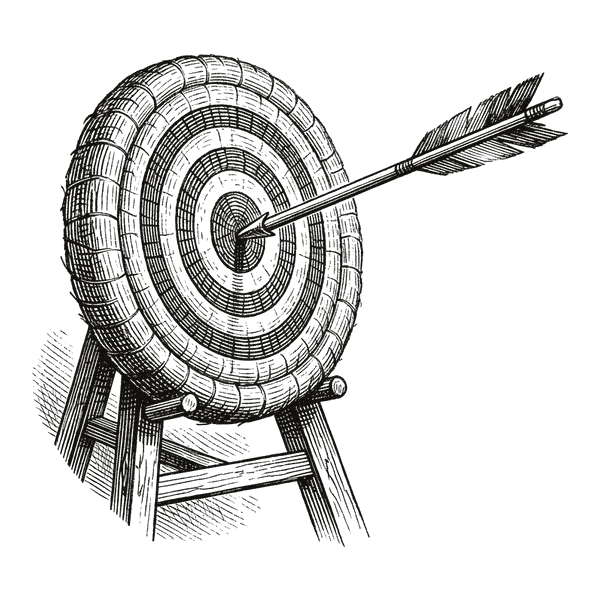
Stokha is built on the Greek root stokh-, as in stókhos: an aim, a target, a guess. The same root gives English the word stochastic. It is spelled S-T-O-K-H-A.
View markets